
Sematide Pre-filled Pen
Semaglutide Injection Pre-filled Pen 2mg/3ml & 4mg/3ml — PCD Pharma Franchise, Wholesale Supply & Third Party Manufacturing
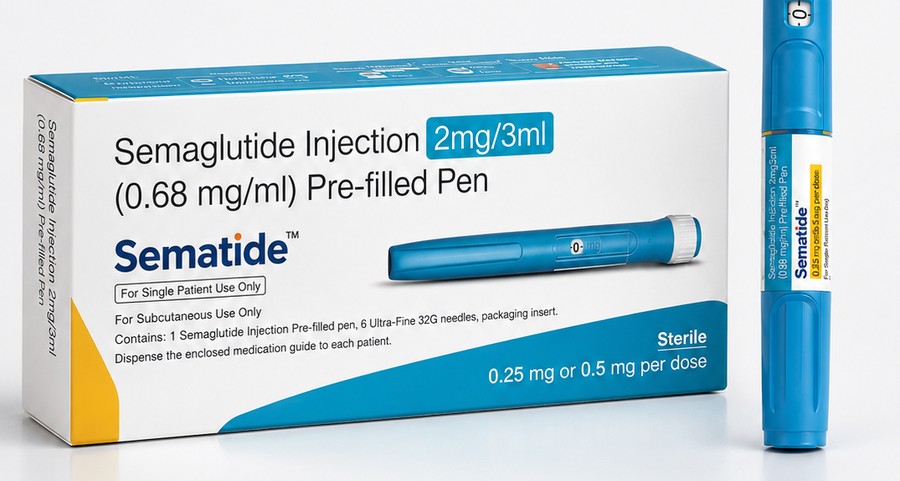
| Composition | Semaglutide Injection |
|---|---|
| Dosage Form | Pre-filled Pen (Subcutaneous Injection) |
| Pack Type | Pre-filled Pen carton with 6 ultra-fine 32G needles and medication guide |
| Available Strengths | Sematide 2mg/3ml Pre-filled Pen, Sematide 4mg/3ml Pre-filled Pen |
| MRP | See strength-wise pricing below |
| Therapy | Diabetology / Endocrinology — GLP-1 Receptor Agonist (Incretin Mimetic) |
| Storage | Before first use: store refrigerated at 2 °C to 8 °C. Do NOT freeze; discard if frozen. Keep the pen cap on to protect from light. After first use: the pen may be stored either refrigerated at 2–8 °C or at room temperature below 30 °C, and must be discarded 56 days after first use. Do not store with the needle attached. Keep out of reach of children. |
📱 WhatsApp Enquiry📞 Call: +919041677932
Available Strengths
Sematide is supplied in two pre-filled pen strengths covering the full once-weekly semaglutide titration schedule — the 2mg/3ml pen for initiation and early maintenance, and the 4mg/3ml pen for higher maintenance dosing. Each carton contains one pre-filled pen, 6 ultra-fine 32G needles and the patient medication guide.
Sematide 2mg/3ml Pre-filled Pen
| Concentration | 0.68 mg/ml |
|---|---|
| Delivers | 0.25 mg or 0.5 mg per dose, once weekly |
| Pack | 1 Pre-filled Pen + 6 ultra-fine 32G needles |
| MRP | On request |
Sematide 4mg/3ml Pre-filled Pen
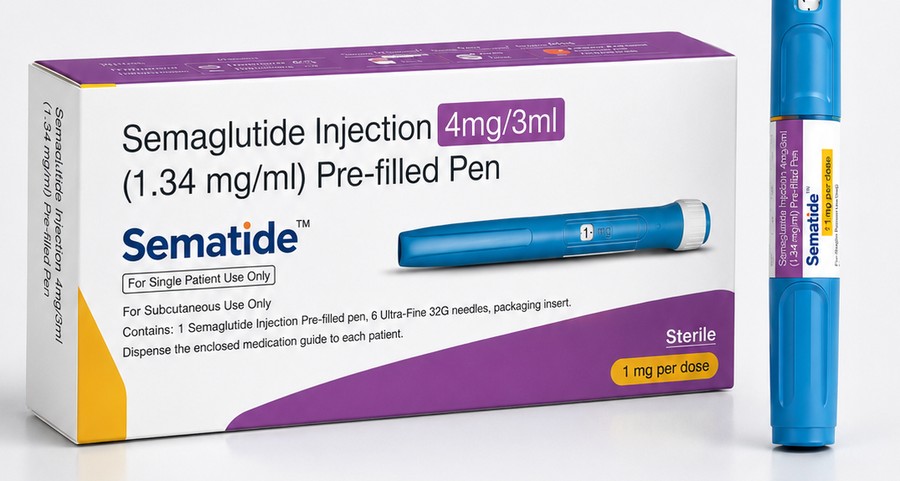
| Concentration | 1.34 mg/ml |
|---|---|
| Delivers | 1 mg per dose, once weekly |
| Pack | 1 Pre-filled Pen + 6 ultra-fine 32G needles |
| MRP | On request |
About Sematide Pre-filled Pen
Semaglutide Injection is a once-weekly GLP-1 receptor agonist (incretin mimetic) supplied in a single-patient-use pre-filled pen, indicated as an adjunct to diet and exercise to improve glycaemic control in adults with Type 2 Diabetes Mellitus. Trumac Healthcare is a WHO-GMP certified manufacturer and supplier of Semaglutide Injection pre-filled pens in India, offering the product on monopoly PCD pharma franchise, wholesale distribution and third party / contract manufacturing basis. Marketed under the brand name Sematide.
Semaglutide Injection is available in two pre-filled pen strengths — 2mg/3ml (0.68 mg/ml) delivering 0.25 mg or 0.5 mg per dose, and 4mg/3ml (1.34 mg/ml) delivering 1 mg per dose. Together these cover the complete standard titration schedule, from the four-week initiation phase through to full maintenance dosing. Each carton contains one pre-filled pen, six ultra-fine 32G needles and the patient medication guide.
Semaglutide mimics endogenous glucagon-like peptide-1, stimulating insulin secretion only when blood glucose is elevated, suppressing inappropriate glucagon release and slowing gastric emptying. Because insulin release is glucose-dependent, the intrinsic risk of hypoglycaemia is low when used without insulin or a sulphonylurea.
As one of the growing GLP-1 manufacturers in India, Trumac Healthcare supplies Semaglutide Injection to PCD franchise partners, distributors, wholesalers and hospital chains pan-India. Every batch ships with full QC documentation and Certificate of Analysis, and all despatch is cold-chain compliant. Third party contract manufacturing under your own brand name is available on request — connect with us on WhatsApp at +91 90416 77932 to discuss net rates, pack configuration and monopoly territory availability.
Indications
- Adjunct to diet and exercise to improve glycaemic control in adults with Type 2 Diabetes Mellitus
- Add-on therapy where metformin alone or metformin plus another oral antidiabetic provides inadequate control
- Reduction of major adverse cardiovascular events in adults with Type 2 Diabetes Mellitus and established cardiovascular disease
- Suitable for patients where a once-weekly injectable regimen improves adherence over daily therapy
- May be used in combination with metformin, sulphonylureas, SGLT2 inhibitors or basal insulin, per physician judgement
Mechanism of Action
Semaglutide is a long-acting analogue of human glucagon-like peptide-1 (GLP-1) sharing 94% sequence homology with the native hormone. Three structural modifications give it a half-life of approximately one week, enabling once-weekly dosing: substitution of alanine at position 8 with alpha-aminoisobutyric acid confers resistance to degradation by dipeptidyl peptidase-4 (DPP-4); a C18 fatty di-acid chain attached via a hydrophilic spacer at lysine-26 produces strong reversible albumin binding, which both slows renal clearance and provides a circulating depot; and substitution of lysine at position 34 with arginine prevents acylation at the wrong site. Semaglutide binds and activates the GLP-1 receptor, a G-protein-coupled receptor expressed on pancreatic beta cells, alpha cells, gastric smooth muscle and hypothalamic neurons. Receptor activation raises intracellular cyclic AMP and produces four complementary effects: (1) glucose-dependent enhancement of insulin secretion from beta cells — insulin is released only when plasma glucose is elevated, which is why the intrinsic hypoglycaemia risk is low; (2) suppression of inappropriately elevated glucagon secretion from alpha cells, reducing hepatic glucose output; (3) slowing of gastric emptying, which blunts the post-prandial glucose excursion; and (4) action on hypothalamic appetite centres promoting satiety and reduced energy intake. The net clinical effect is a substantial reduction in HbA1c together with a reduction in body weight and systolic blood pressure.
Dosage & Administration
STRICTLY SPECIALIST-INITIATED — administered by subcutaneous injection ONCE WEEKLY on the same day each week, at any time of day, with or without food.
INITIATION: 0.25 mg once weekly for 4 weeks. This starting dose is for gastrointestinal tolerability only and is NOT effective for glycaemic control.
ESCALATION: after 4 weeks increase to 0.5 mg once weekly. If additional glycaemic control is needed after at least 4 weeks on 0.5 mg, increase to 1 mg once weekly. If further control is needed after at least 4 weeks on 1 mg, the dose may be increased to a maximum of 2 mg once weekly.
PEN SELECTION: the 2mg/3ml pen delivers the 0.25 mg and 0.5 mg doses (initiation and early maintenance); the 4mg/3ml pen delivers the 1 mg dose (maintenance).
INJECTION SITES: abdomen, thigh or upper arm — rotate the site with each injection. Do not inject into a vein or muscle. Use a fresh ultra-fine 32G needle for every injection and remove it after use.
MISSED DOSE: administer as soon as possible within 5 days of the missed dose. If more than 5 days have passed, skip it and resume the regular weekly schedule.
DAY CHANGE: the day of the week may be changed provided at least 72 hours (3 days) separate two doses.
CONCOMITANT THERAPY: when added to insulin or a sulphonylurea, the dose of that agent should be reduced to lower hypoglycaemia risk. No dose adjustment is required for age, or for mild to moderate renal or hepatic impairment; experience in severe renal impairment and end-stage renal disease is limited.
Side Effects
GASTROINTESTINAL effects are the most common and are usually mild-to-moderate, dose-related and transient during titration: nausea, vomiting, diarrhoea, constipation, abdominal pain, dyspepsia, eructation and decreased appetite. Gradual dose escalation, smaller meals and avoiding fatty foods reduce these substantially.
OTHER REPORTED EFFECTS: injection-site reactions, fatigue, dizziness, dysgeusia, and increased serum lipase and amylase.
IMPORTANT RISKS REQUIRING VIGILANCE: acute pancreatitis — discontinue immediately if severe persistent abdominal pain radiating to the back occurs, with or without vomiting. Acute gallbladder disease, including cholelithiasis and cholecystitis. Diabetic retinopathy complications — patients with pre-existing retinopathy should be monitored, as rapid improvement in glycaemic control has been associated with temporary worsening. Acute kidney injury, usually secondary to volume depletion from severe vomiting or diarrhoea — maintain hydration. Hypoglycaemia, which is uncommon with semaglutide alone but significantly more likely when combined with insulin or a sulphonylurea. Hypersensitivity reactions including anaphylaxis and angioedema (rare).
Contraindications & Precautions
BOXED WARNING — RISK OF THYROID C-CELL TUMOURS: semaglutide caused dose-dependent and treatment-duration-dependent thyroid C-cell tumours in rodents at clinically relevant exposures. It is unknown whether it causes medullary thyroid carcinoma in humans. Semaglutide is therefore CONTRAINDICATED in patients with a personal or family history of medullary thyroid carcinoma (MTC), and in patients with Multiple Endocrine Neoplasia syndrome type 2 (MEN 2). Counsel every patient on the symptoms of thyroid tumours — a neck mass, dysphagia, persistent hoarseness or dyspnoea.
OTHER CONTRAINDICATIONS: known hypersensitivity to semaglutide or any excipient. Type 1 Diabetes Mellitus — semaglutide is not a substitute for insulin and must not be used in type 1 diabetes. Diabetic ketoacidosis. Pregnancy — discontinue at least 2 months before a planned pregnancy owing to the long washout period; animal studies showed embryo-foetal harm. Breastfeeding — not recommended.
PRECAUTIONS: history of pancreatitis (use with caution; consider an alternative agent). Severe gastrointestinal disease including gastroparesis — not recommended. Pre-existing diabetic retinopathy requires ophthalmic monitoring. Severe renal impairment and end-stage renal disease — limited experience. Because semaglutide delays gastric emptying it may affect the absorption of concomitant oral medicines, particularly those with a narrow therapeutic index; monitor accordingly. Patients undergoing elective surgery or procedures requiring anaesthesia should inform their anaesthetist, as delayed gastric emptying may increase the risk of pulmonary aspiration.
Storage
Before first use: store refrigerated at 2 °C to 8 °C. Do NOT freeze; discard if frozen. Keep the pen cap on to protect from light. After first use: the pen may be stored either refrigerated at 2–8 °C or at room temperature below 30 °C, and must be discarded 56 days after first use. Do not store with the needle attached. Keep out of reach of children.
Sematide Pre-filled Pen is available for monopoly-based PCD pharma franchise across India and for third-party manufacturing under your brand. WHO-GMP certified, with full visual-aid and promotional support. Become a Trumac franchise partner →
Frequently Asked Questions
What is Sematide Pre-filled Pen used for?
Sematide contains Semaglutide, a GLP-1 receptor agonist given as a once-weekly subcutaneous injection. It is indicated as an adjunct to diet and exercise to improve glycaemic control in adults with Type 2 Diabetes Mellitus, and to reduce the risk of major adverse cardiovascular events in adults with type 2 diabetes who have established cardiovascular disease. It is not for use in type 1 diabetes.
What is the difference between the 2mg/3ml and 4mg/3ml pens?
Both pens contain the same molecule — semaglutide — at different concentrations, and they cover different stages of the standard titration. The 2mg/3ml pen (0.68 mg/ml) delivers 0.25 mg or 0.5 mg per dose and is used for the 4-week initiation phase and early maintenance. The 4mg/3ml pen (1.34 mg/ml) delivers 1 mg per dose and is used for higher maintenance dosing. Most patients start on the 2mg pen and move to the 4mg pen as the dose is escalated.
Who manufactures Semaglutide Injection pre-filled pens in India?
Trumac Healthcare is a WHO-GMP certified manufacturer and supplier of Semaglutide Injection pre-filled pens in India, marketed under the brand name Sematide. We supply pan-India to PCD franchise partners, wholesalers, distributors and hospital chains, with full QC documentation, batch Certificate of Analysis and cold-chain compliant despatch. Contact +91 90416 77932 for net rates and availability.
Is Semaglutide Injection available for PCD pharma franchise on monopoly basis?
Yes. Semaglutide Injection pre-filled pen is available from Trumac Healthcare for monopoly PCD (Propaganda Cum Distribution) pharma franchise across India. Monopoly rights can be granted at district or state level. Franchise partners receive promotional support, monopoly territory protection, competitive net rates with healthy PTR/PTS margins, and dedicated backend support for billing and despatch.
Do you offer Semaglutide Injection for third party or contract manufacturing?
Yes. Trumac Healthcare undertakes third party manufacturing and contract manufacturing of Semaglutide Injection pre-filled pens under your own brand name, subject to minimum order quantity and valid drug licence and GST documentation. Custom carton design, pack configuration and artwork are supported. Share your projected monthly volumes on WhatsApp to receive a quotation.
Can Semaglutide Injection be supplied on wholesale or distributor basis?
Yes. Apart from PCD franchise, Semaglutide Injection is supplied to wholesalers, stockists and distributors at wholesale rates against valid drug licence and GST registration. Because the product requires cold-chain storage at 2–8 °C prior to first use, we arrange temperature-controlled despatch for all wholesale consignments.
How does Semaglutide work?
Semaglutide mimics GLP-1, a natural gut hormone released after eating. It acts in four ways: it stimulates the pancreas to release insulin but only when blood glucose is high, so the intrinsic hypoglycaemia risk is low; it suppresses glucagon, reducing the amount of glucose the liver releases; it slows the rate at which the stomach empties, blunting the post-meal glucose spike; and it acts on appetite centres in the brain to increase satiety. Structural modifications to the molecule give it a half-life of about a week, which is what makes once-weekly dosing possible.
How is Sematide injected, and how often?
Once weekly, on the same day each week, by subcutaneous injection into the abdomen, thigh or upper arm — with or without food, at any time of day. Rotate the injection site each time. Use a fresh ultra-fine 32G needle for every injection and remove it afterwards. The usual schedule is 0.25 mg weekly for 4 weeks, then 0.5 mg weekly, then 1 mg weekly if more control is needed, up to a maximum of 2 mg weekly — each step at least 4 weeks apart.
What if a dose is missed?
Take the missed dose as soon as possible, provided no more than 5 days have passed. If more than 5 days have passed, skip that dose entirely and take the next one on the regular scheduled day. The injection day can be changed if needed, as long as there are at least 72 hours between two doses.
How should Sematide be stored?
Before first use, keep the pen refrigerated at 2–8 °C, with the cap on to protect it from light. Do not freeze — discard the pen if it has been frozen. After the first use, the pen can be kept either in the fridge at 2–8 °C or at room temperature below 30 °C, and must be discarded 56 days after first use. Never store the pen with a needle attached. Trumac Healthcare provides cold-chain-compliant despatch for all PCD partners.
What are the most common side effects?
Gastrointestinal effects are the most common — nausea, vomiting, diarrhoea, constipation, abdominal pain and reduced appetite. These are usually mild to moderate, occur mainly during dose escalation, and settle with time. Escalating the dose gradually, eating smaller meals and avoiding fatty food help considerably. More serious but less common risks include pancreatitis, gallbladder disease, worsening of pre-existing diabetic retinopathy and dehydration-related kidney injury.
Who must NOT take Semaglutide?
Semaglutide carries a boxed warning for thyroid C-cell tumours seen in rodent studies, and is contraindicated in anyone with a personal or family history of medullary thyroid carcinoma (MTC) or with Multiple Endocrine Neoplasia syndrome type 2 (MEN 2). It is also contraindicated in type 1 diabetes, in diabetic ketoacidosis, in known hypersensitivity to semaglutide, and in pregnancy — it should be stopped at least 2 months before a planned pregnancy. It is not recommended during breastfeeding or in severe gastrointestinal disease such as gastroparesis.
Is Sematide approved for weight loss?
No. Sematide is indicated for glycaemic control in adults with Type 2 Diabetes Mellitus and for cardiovascular risk reduction in type 2 diabetes with established cardiovascular disease. Weight reduction is a recognised effect of GLP-1 therapy, but weight management is a separate indication requiring a different approved product and dosing schedule. Sematide should be prescribed only for its approved indications, by a qualified physician.
Does Semaglutide cause hypoglycaemia?
On its own, rarely — because semaglutide only stimulates insulin release when blood glucose is elevated. However, the risk rises significantly when it is combined with insulin or a sulphonylurea. In those patients the dose of insulin or sulphonylurea is usually reduced when semaglutide is started, and blood glucose should be monitored more closely during titration.
Is Sematide available for PCD franchise?
Yes. Sematide is available from Trumac Healthcare for pan-India monopoly PCD (Propaganda Cum Distribution) pharma franchise and for third-party manufacturing under your own brand. We supply WHO-GMP manufactured stock with full QC documentation, batch COA and cold-chain-compliant despatch. Contact us on WhatsApp at +91 90416 77932 for pricing, pack configuration and monopoly territory availability.
What does each carton contain?
Each Sematide carton contains one single-patient-use pre-filled pen, six ultra-fine 32G needles and the patient medication guide, which must be dispensed to every patient. The pen is sterile and for subcutaneous use only.